Shoulder condition
Shoulder instability
A shoulder that dislocates, partially slips, or repeatedly feels as if it may come out of place.
The shoulder has exceptional motion because the socket is relatively shallow. Stability comes from the labrum, capsule, ligaments, rotator cuff, and coordinated muscle control. Injury or generalized looseness can allow the joint to dislocate or partially slip, causing pain, apprehension, and loss of confidence in the arm.
See the anatomy and imaging
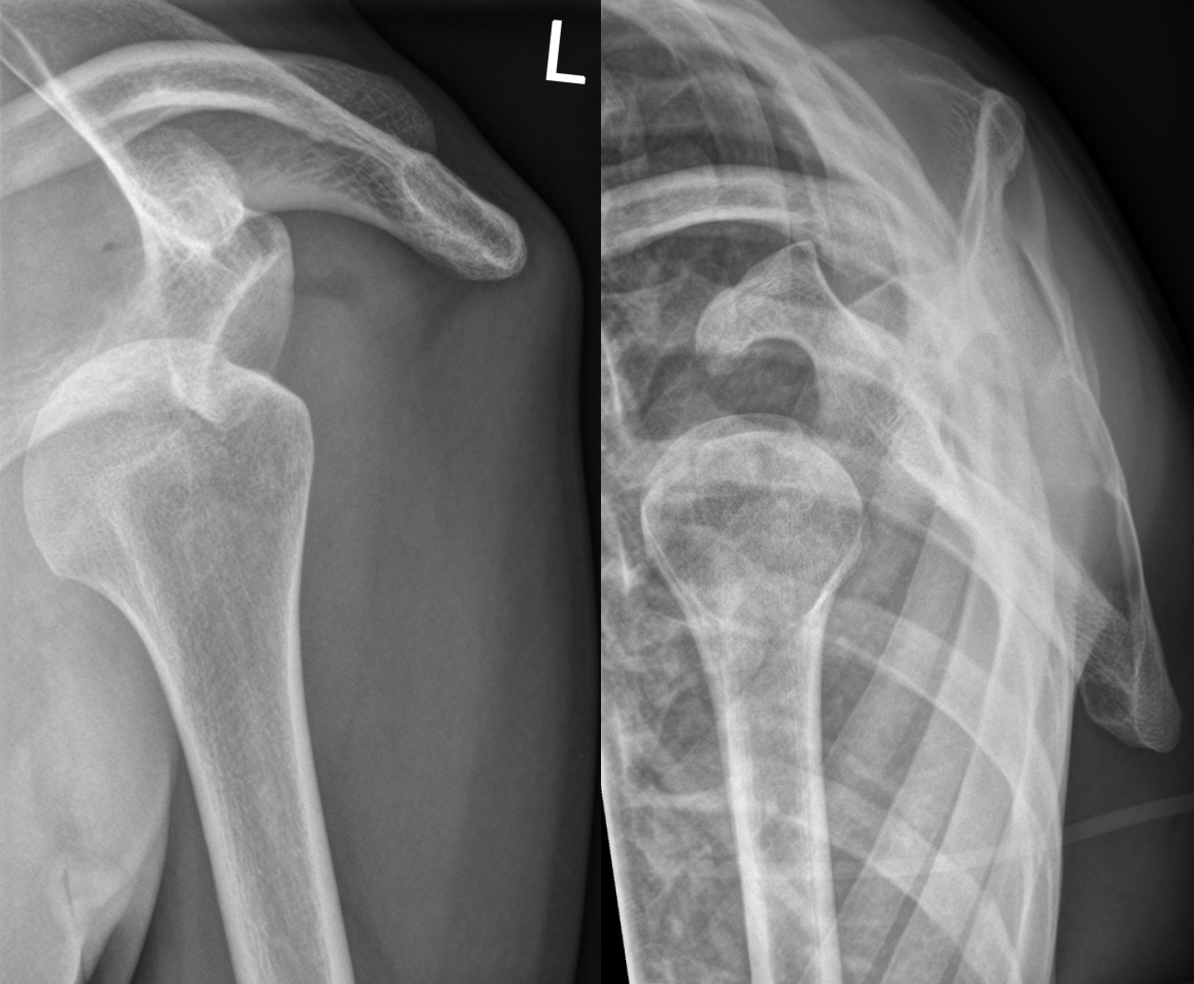
Anatomy of stability
The labrum deepens the glenoid socket. The capsule and ligaments provide passive restraint, while the rotator cuff and shoulder-blade muscles keep the humeral head centered during motion. A traumatic anterior dislocation can detach the front labrum (a Bankart lesion) and may indent the humeral head (a Hill-Sachs lesion).
Common patterns
Traumatic instability usually begins with an injury that damages the labrum, capsule, or bone. Multidirectional instability is often related to generalized looseness and altered muscle control rather than one major injury. The distinction matters because treatment is different.
Why repeat episodes matter
Repeated dislocations can stretch the capsule and increase damage to the socket or humeral head. Recurrence risk is influenced by age, activity, sport, hyperlaxity, bone loss, and the number of prior events. These features help determine whether rehabilitation alone or early stabilization is more appropriate.
Evaluation
We review the direction and number of instability episodes, sport or work demands, and any nerve symptoms. Examination assesses laxity, apprehension, strength, and shoulder-blade mechanics. X-rays look for bone injury; MRI and CT may define labral damage and bone loss when needed.
Treatment
- Physical therapy to improve dynamic stability and shoulder-blade control
- Activity modification during recovery
- Arthroscopic labral repair and capsular tightening for selected soft-tissue injuries
- Open bone-restoring procedures such as Latarjet when bone loss or the instability pattern requires it
How the operation is selected
A soft-tissue Bankart repair restores the labrum and tightens stretched capsule when bone support is adequate. When socket bone loss, an engaging humeral defect, collision-sport exposure, or failed repair raises recurrence risk, a bone-restoring procedure may be considered. Imaging measurements are interpreted with the whole clinical picture.
After a dislocation
A shoulder that looks out of place, is severely painful, or has numbness or weakness needs prompt medical care. Do not attempt to force it back into position yourself.
Evidence and further reading
- AAOS OrthoInfo: Chronic Shoulder Instability
- Open-access review: Recurrent Anterior Shoulder Instability
- OrthoBullets: Traumatic Anterior Shoulder Instability
Educational content is reviewed for patient clarity and is not a substitute for an examination or individualized medical advice.
PIA Shoulder MD