Shoulder condition
Shoulder arthritis
Cartilage loss can cause pain, stiffness, grinding, and loss of everyday function.
Healthy cartilage lets the ball and socket glide smoothly. Arthritis damages that surface, creating pain and stiffness that may make dressing, sleeping, reaching, or lifting difficult. Arthritis can result from age-related wear, inflammatory disease, prior injury, loss of blood supply to the humeral head, or a chronic rotator cuff tear.
See the anatomy and imaging
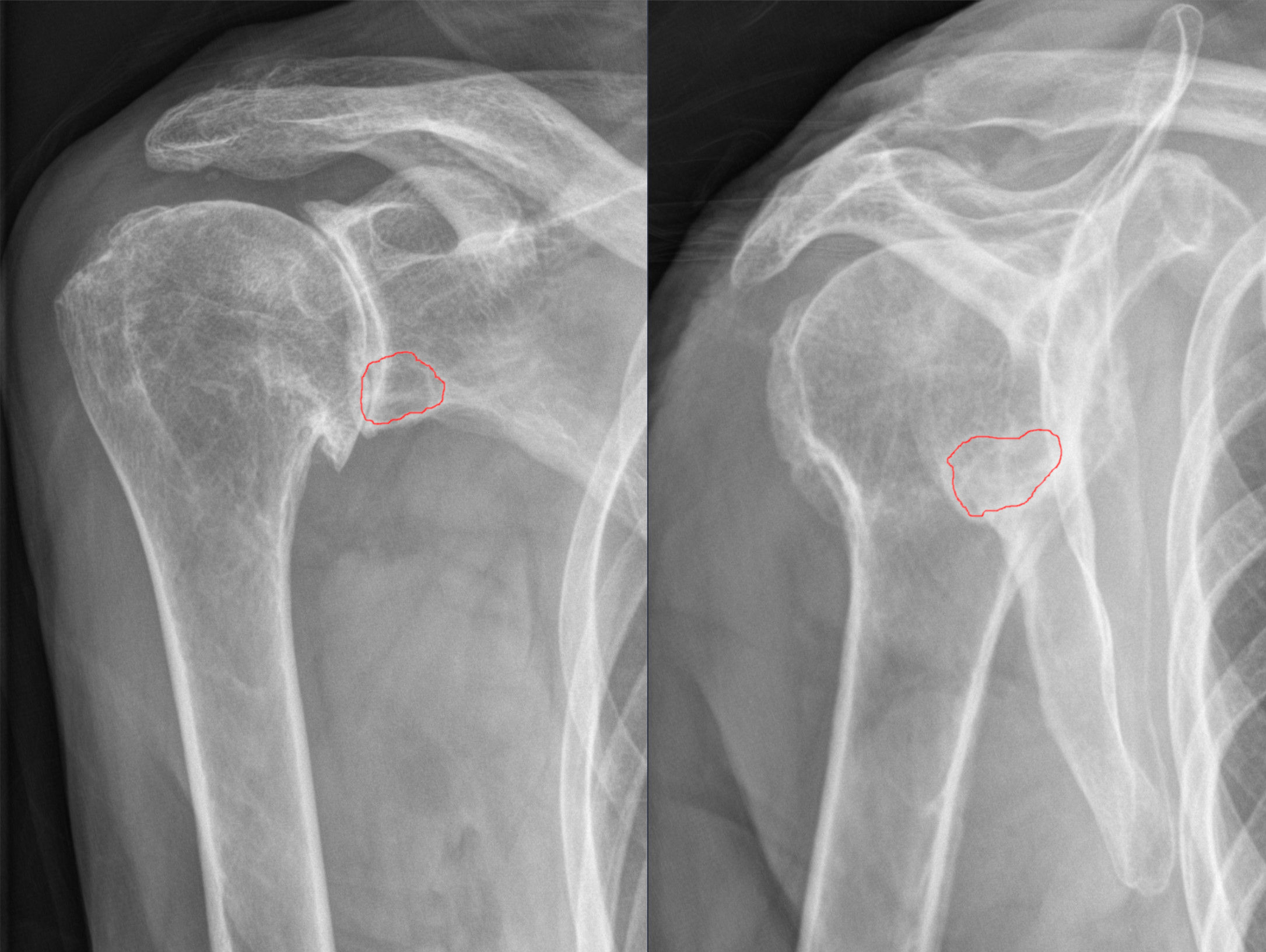
What changes inside the joint
The humeral head and glenoid are normally covered by smooth articular cartilage. As cartilage thins, the joint space narrows and the body may form bone spurs. In advanced disease, the humeral head or socket can wear unevenly, changing alignment and making preoperative planning important.
Types of shoulder arthritis
- Osteoarthritis
- Inflammatory arthritis, including rheumatoid arthritis
- Post-traumatic arthritis
- Rotator cuff tear arthropathy
- Avascular necrosis
Typical symptoms
Patients often describe a deep ache, stiffness, night pain, and grinding or catching. Loss of external rotation and difficulty reaching behind the back are common. Neck disease, rotator cuff disorders, and adhesive capsulitis can overlap, so the diagnosis should not be based on an X-ray alone.
Diagnosis
A physical examination evaluates motion, strength, tenderness, and the neck. Standard shoulder X-rays often establish the diagnosis and show joint-space loss, bone spurs, deformity, or altered alignment. CT or MRI is used selectively for surgical planning or to evaluate the rotator cuff and bone.
Nonsurgical care
- Changing painful activities while maintaining safe movement
- Anti-inflammatory or pain medication when appropriate
- Physical therapy focused on useful motion and surrounding muscle function
- Corticosteroid injection in selected patients
Shoulder replacement
Replacement becomes an option when pain and loss of function remain unacceptable despite appropriate nonsurgical care. An anatomic replacement generally relies on a functioning rotator cuff. A reverse replacement changes shoulder mechanics and is often used when the cuff is not functional, bone anatomy is complex, or a prior replacement has failed.
Choosing anatomic or reverse replacement
Selection is based on the diagnosis, rotator cuff integrity, glenoid wear, bone quality, deformity, age, activity, and prior surgery. CT-based three-dimensional planning may help define bone loss and component position. The goal is dependable pain relief and useful function—not simply matching an implant to age alone.
Evidence and further reading
- AAOS OrthoInfo: Arthritis of the Shoulder
- AAOS Clinical Practice Guideline: Glenohumeral Joint Osteoarthritis
- AAOS OrthoInfo: Shoulder Joint Replacement
Educational content is reviewed for patient clarity and is not a substitute for an examination or individualized medical advice.
PIA Shoulder MD