
Complex and revision shoulder care
Failed shoulder surgery and revision
A structured evaluation for persistent pain, stiffness, weakness, instability, infection, fracture, or implant problems after prior surgery.
Persistent symptoms after shoulder surgery do not always mean that another operation is required. Revision care begins by defining what did not heal or function as expected and why. Prior records, operative reports, implant information, cultures, and earlier imaging can be as important as a new scan.
ImportantNew fever, wound drainage, rapidly increasing redness, a new deformity, or a cold or numb hand after surgery needs urgent evaluation. Contact the operating team or seek emergency care as appropriate.
See the anatomy and imaging
Why surgery can fail
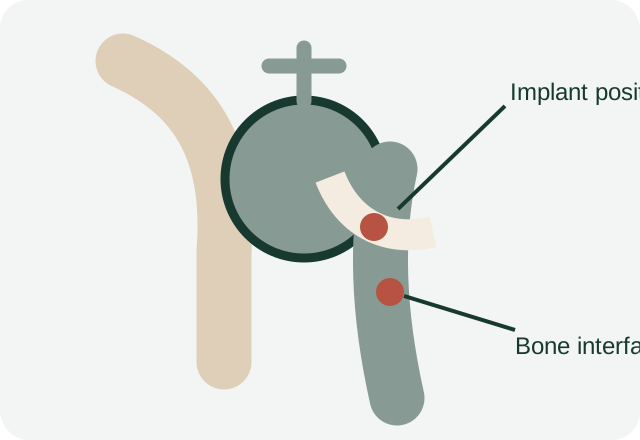
Possible causes include stiffness, incomplete tendon healing, recurrent instability, progression of arthritis, implant loosening or wear, fracture, nerve problems, and infection. More than one problem may be present, and symptoms can also come from the neck or another nearby structure.
A stepwise evaluation
The visit reviews the original diagnosis, each operation, rehabilitation, symptom timeline, and medical risk factors. Examination evaluates motion, strength, stability, deltoid and nerve function. X-rays are foundational; CT, ultrasound, MRI with metal-artifact reduction, blood tests, aspiration, or tissue cultures are used selectively.
Bring these records
- Operative reports and clinic notes
- Implant stickers or the implant manufacturer and model
- Original and interval X-rays, CT, MRI, or ultrasound
- Prior laboratory, aspiration, and culture results
- Physical therapy notes and a current medication list
Treatment options
Some patients improve with focused rehabilitation, pain management, or treatment of a diagnosis that was previously missed. Revision surgery may involve capsular release, tendon or labral reconstruction, bone grafting, implant removal or exchange, fracture fixation, or staged treatment of infection.
What revision surgery can and cannot do
Revision surgery is usually more complex than the first operation because tissue planes, tendon quality, bone stock, and infection risk have changed. The goal may be pain relief and useful function rather than a completely normal shoulder. A clear diagnosis and realistic goals are essential before proceeding.
For referring physicians
Complex shoulder and elbow referrals are welcome, including failed cuff repair, recurrent instability, periprosthetic fracture, bone loss, painful arthroplasty, and suspected infection. Please send operative reports, implant details, prior cultures, and imaging when available. To discuss or arrange a referral, call (309) 676-5546.
Evidence and further reading
- AAOS OrthoInfo: Shoulder Joint Replacement
- Open-access review: Evaluation of the Painful Shoulder Arthroplasty
- International Consensus Meeting: Shoulder Infection
Educational content is reviewed for patient clarity and is not a substitute for an examination or individualized medical advice.
PIA Shoulder MD